


- Your cart is currently empty.
Free vs Paid SSL Certificates: 6 Key Differences
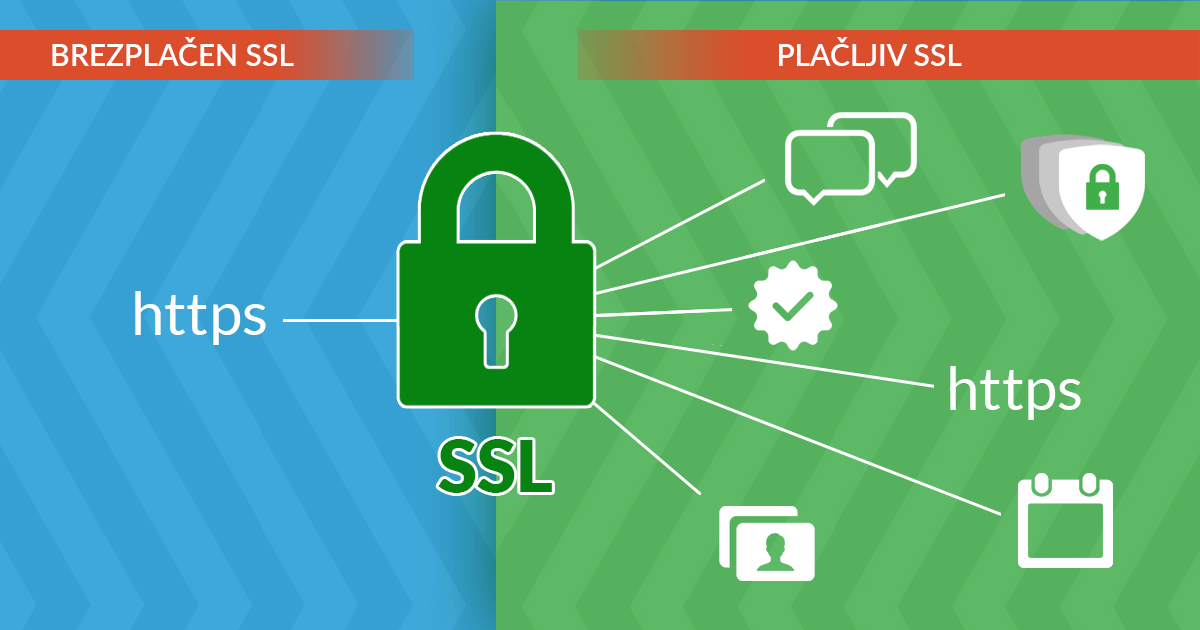

If you follow our blog regularly, it’s clear to you that SSL certificates have become a “must-have” for every website. For those of you who don’t know much about SSL, here’s a brief overview of the benefits of using it:
- Secure HTTPS connection. A secure HTTPS connection is established between the website and its visitors, through which the data transmission is encrypted. The data can only be read by the intended recipient, so there is much less chance of sensitive data being misused.
- Building visitor trust. Visitors feel secure on the website because they can recognise the SSL certificate installed by the HTTPS connection. They can also identify the certificate by the padlock icon that appears to the left of the website URL.
- Higher Google search engine ranking. Websites with an SSL certificate installed rank higher in search engines because of Google’s strong commitment to promoting safe use of the internet. Higher search engine rankings mean more traffic to your website.
- No browser security warnings. All major web browsers (Chrome, Firefox, Opera, Safari) warn about unsecured connections and the possibility of data misuse on pages accessed via HTTP. Such notifications are a deterrent to website visitors.
- Possibility to use HTTP/2 and AMP. An increasing number of hosting providers allow the use of the HTTP/2 high-speed protocol, which requires an SSL certificate to be installed beforehand. The same applies to AMP, i.e. accelerated pages for mobile devices.
Is your website still accessible from the link starting with http://? We advise you to install an SSL certificate as soon as possible, as you are losing visitors unnecessarily. This can be particularly fatal in the case of company websites, especially online shops.
There are certainly more than enough reasons to install an SSL certificate. The question is whether to opt for a free or a paid certificate. Given that both use the same encryption and the same level of data security, many people wonder:
Why pay for an SSL certificate when I can get a free one instead of a paid one?
It goes without saying that there are differences between free and paid SSL certificates. Let’s take a look at them.
1. Types of SSL certificates
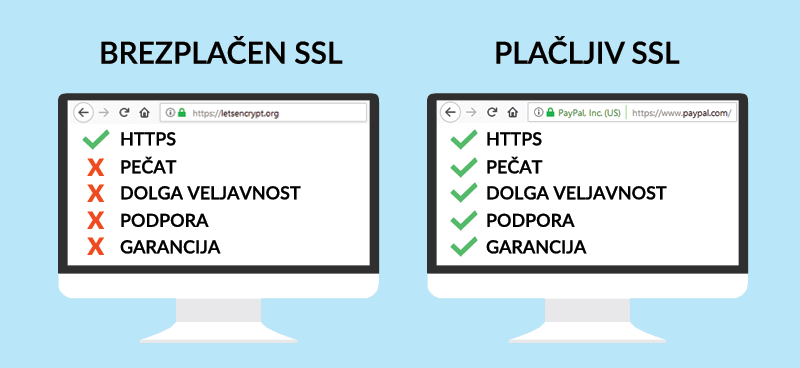
A free SSL certificate is only available as a Domain Name Certificate (DV SSL), which only verifies the ownership of the domain. As this is only basic authentication, domain certificates are used for simple websites and blogs where there is no need for more extensive verification.
However, a paid SSL certificate can also be a business (OV SSL) or extended (EV SSL) certificate. In both cases, in addition to domain verification, the certificate issuer also verifies the company or organisation. If you need SSL for a business website, we recommend a business or extended certificate.
Verification level 2
As a free SSL certificate is only available as a domain certificate, only automated verification of domain ownership is performed before it is issued. Having a free SSL certificate installed on a website does not necessarily mean that the website is safe to use.
In the case of business and extended certificates, the issuer also manually verifies the company behind the domain itself. This requires the issuer to provide appropriate documentation to confirm that it is a legitimate company or organisation.
Business and extended certificates cannot be issued to natural persons.
Level of trust
More and more Internet users are becoming aware of the importance of SSL-certified websites. How high the level of trust is depends on the extent to which the presence of the certificate is visible on the site. This again depends on the type of certificate.
| FREE SSL | DOMESTIC SSL | BUSINESS SSL | EXPANDED SSL |
|---|---|---|---|
| https:// link | https:// link | https:// link | https:// link |
| lock icon | lock icon | lock icon | lock icon |
| – | static seal | dynamic seal | dynamic seal |
The level of trust is extremely important. The more visitors trust a website, the longer they will stay and, in the case of an online shop, the quicker they will make a purchase decision.
Numerous online research studies have shown that the chances of making a purchase from an online shop increase significantly if visitors are aware of the use of an SSL certificate. A prominent site seal can further improve results.
4. Period of validity
The most well-known issuers of free certificates issue them for a period of 30 to 90 days. This means that website owners have to renew their certificate after the expiry date. If they forget to renew, the website is no longer accessible via a secure HTTPS connection. This can also cause problems with the website’s visibility in search engines (e.g. Google).
Paid SSL certificates are issued for a longer period of 1 to 2 years. Customers are notified of the expiry well in advance by email, so there is much less chance of forgetting to renew the certificate. In addition, the renewal process is carried out by the certificate provider.
5. Support
If you decide to purchase a paid SSL certificate, the customer support team will always be available. You will be able to contact them in case of any problems, questions and further explanations. In short, help will always be available by phone or email.
Unfortunately, this is not the case for free certificates, as their issuers simply cannot afford to answer all questions and solve all problems. If you have any questions about free certificates, the best place to find answers is in the various forums and blog posts.
6. Issuer’s guarantee
The vast majority of paid SSL certificates include a high warranty in case anything goes wrong with the issued certificate, resulting in financial loss. As an example, consider the certificates of the world’s most renowned issuer, Sectigo (formerly known as Comodo):
- Sectigo Positive SSL Domain Certificate: $50,000;
- Sectigo Instant SSL business certificate: $50,000;
- Sectigo EV SSL Extended Validation Certificate: $1 750 000.
Do issuers of free certificates also offer a guarantee? Of course, any guarantee is out of the question for them.
Don’t cut corners where you shouldn’t …
Online security is becoming more important every year. Leading IT companies are well aware of this and are setting trends in this area. Google, in particular, has taken various measures in recent years to accelerate the migration of the World Wide Web to the secure HTTPS protocol, made possible by SSL certificates.
Websites that have an SSL certificate installed rank higher in Google search.
Each website owner can choose between a free SSL certificate and a paid SSL certificate. Although a free certificate looks like a great choice at first glance, you should be aware that it has some limitations.
Free SSL certificates are the ideal choice for those running a blog or a small personal website. Then there really is no need for a paid certificate, as there is not even any sensitive data flowing between the website and the visitors.
The situation is completely different for corporate websites and online shops. If free SSL certificates were suitable for them, all leading e-commerce sites would use them. But of course they don’t, and for very good reasons.
Paid SSL certificates have been proven to have a positive impact on online business performance. Especially visitors to online shops are becoming aware of the importance of secure shopping in the face of the increasing number of internet scams.
You may have to pay a few euros for an SSL certificate from a recognised issuer, but you can expect better business results thanks to a higher level of trust from your visitors. After all, no good thing is free, right?
At NEOSERV, we offer certificates from the world’s largest and most recognised issuer – Sectigo. Domain, business and extended SSL certificates are all available at affordable prices. Please check our offer and if you have any further questions, please contact our team.
COMMENT THE POST
Your comment has been successfully submitted
The comment will be visible on the page when our moderators approve it.