


- Your cart is currently empty.
13 Ways to Spot a Fake Online Store

Every day, many online shops are created with the intention of harming visitors to the site. They want to get contact, personal or financial information from you. Misuse of your data can also lead to identity theft or the emptying of your bank account. There are 13 indicators that give away a fake online shop.
1. A cheap-looking site
A first glance can tell you whether an online shop is trustworthy. If it’s a well-designed site, it means that a lot of effort and money has gone into it. However, a bad site looks outdated and has no useful function at first glance. The elements on the site are of no particular value. It is also full of banner ads inviting you to other pages that ask for personal information.
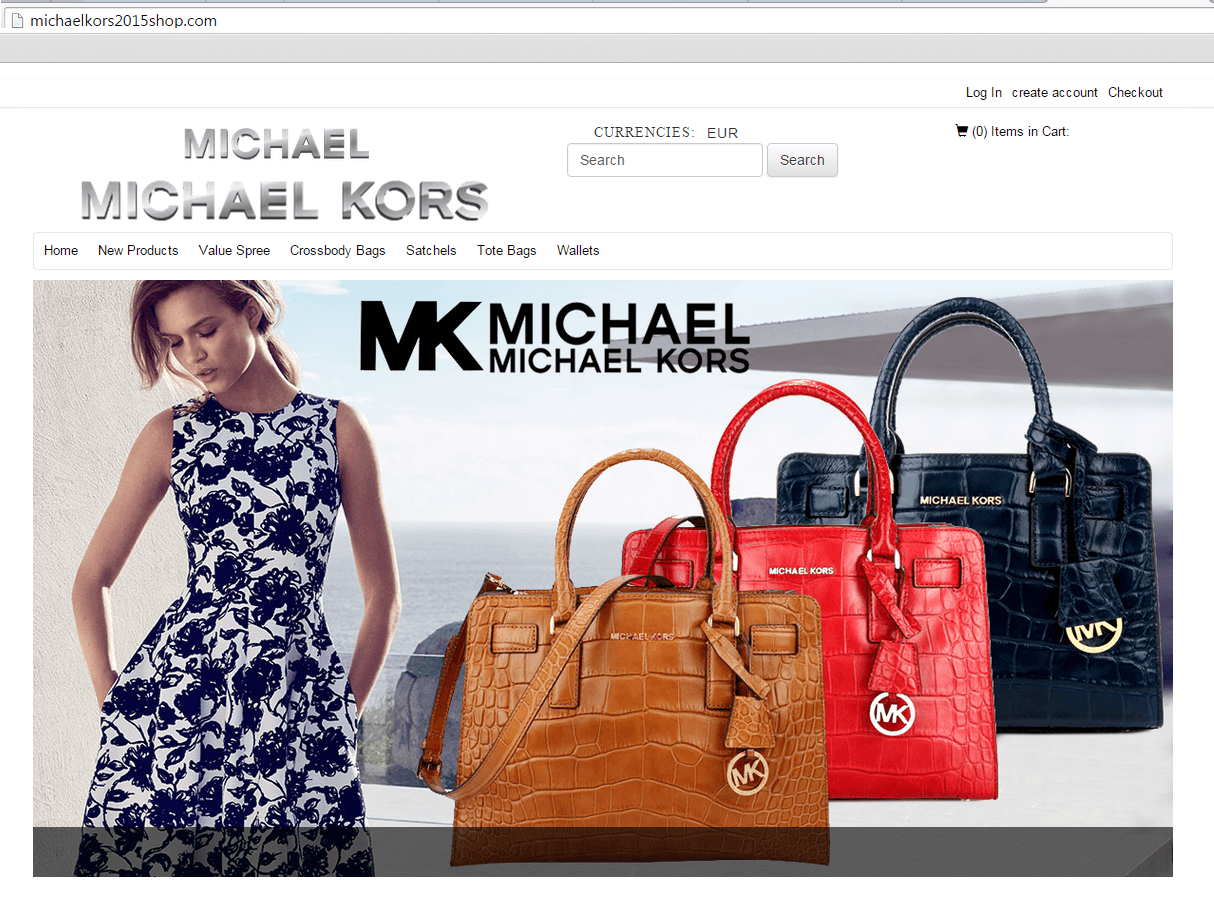
But beware, there are also more and more exceptions that want to give the impression of trust through their graphic design. The online shop above is completely authentic. Read on and you will see that it is a fake shop.
2. Poor grammar
This is also one of the quick methods to check the authenticity of a website. Read some of the content and check for errors. This does not mean minor grammatical errors. Look out for major errors such as mixing genders, conjugations, inappropriate use of participles and so on. These can be clear signs that a website has been made quickly and sloppily, with the sole intention of harming you.
You have probably received some spam emails with a lot of incorrect use of English. This should give you an example of the kind of grammatical mistakes you are looking for on websites.
3. Suspicious links on a website
Clicking on these links will redirect you to pages with unrelated or suspicious content. This is probably a website that deals in reselling links.
4. Excessive number of advertisements on the page
Normally, adverts on a website are not a problem. They are a problem for websites with a lot of traffic that want to make extra money from the ads on their site.
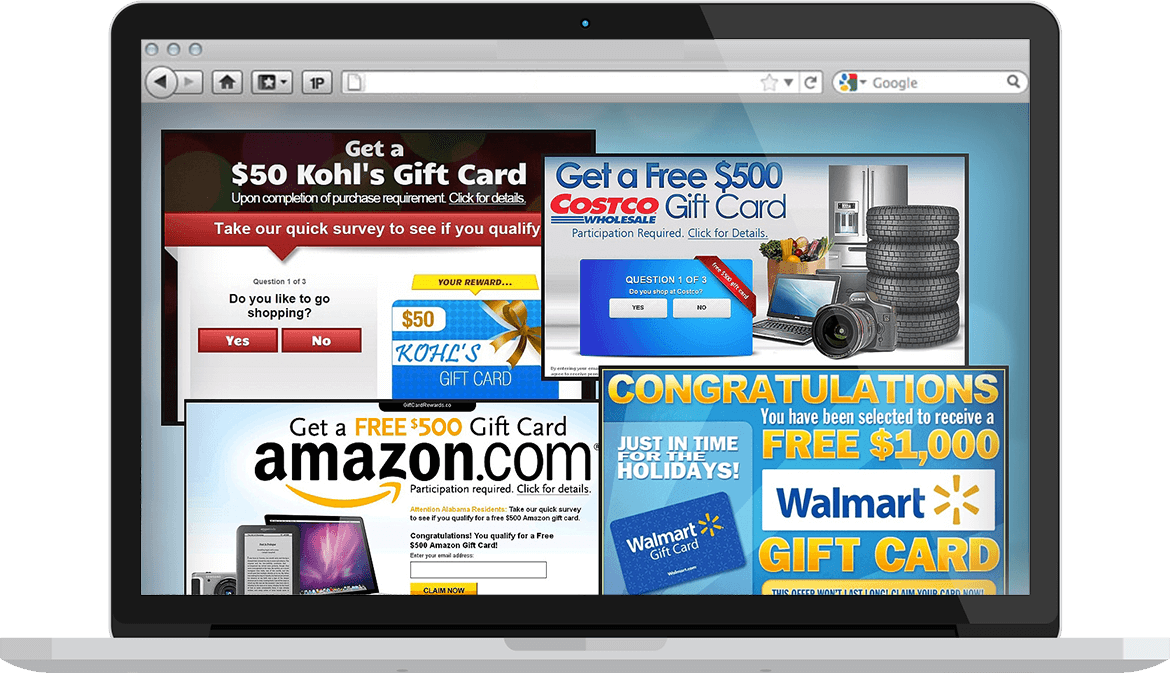
The problem ispop-up ads that open behind your browser in a new window. This is to lure you to paid content, so we recommend that you leave such sites.
5. Outdated and low quality content
The easiest way to check for this is to see if the site has news, blogs or articles. You can see by the dates of the content whether it is a site that keeps up-to-date information. This means that they provide quality content for visitors.
6. No contact details
Every website should contain company information and contact details. It is an added plus if key people employed by the company are listed. If you cannot find this information on the page or cannot verify its authenticity, we recommend that you leave the website.
Most of the time, malicious sites just have a contact form where you enter your email address. The website then sells it to companies that send unsolicited (spam) mail.
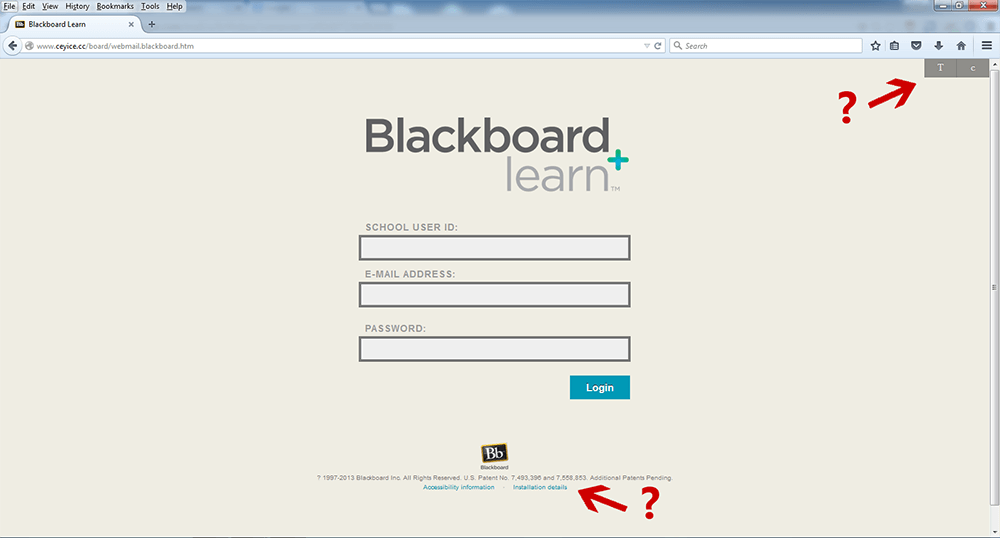
In the example above, you can see that there is no contact information anywhere. On the pages where you enter personal data, it should always be accessible. Please also check the terms and conditions or terms and conditions. These should state the company and all relevant contact details.
7. The online shop does not have an SSL certificate
If the URL of the website starts with https, then the website has an SSL certificate. In this case it is a trusted site. If you are not sure whether it has a certificate, you can also click on the symbol in front of the URL. All the relevant information about the website will be displayed. You can read more about SSL certificates HERE.
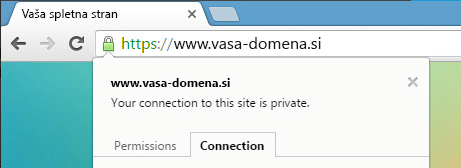
When you buy products online, the site must always have at least a domain SSL certificate.
8. Suspicious domain
A domain is the address of a website and sometimes another indicator of security. You can check all busy and free domains on the website verified.si. You will get information on who the domain registrar is, DNS servers, when the domain is registered until, etc. This information can also tell you if it is a secure website.

For branded sites, you can tell if it is a legitimate site just by the domain name. The example above clearly shows how a website can mislead you. At first glance, the two sites look identical. A trained eye will immediately spot at least a few signs that point to a fake website. However, any user can see the obvious difference just by looking at the URL. The original website uses an SSL certificate and the web address is real. However, the fulzersbooks.com page is immediately obvious that it is not genuine.
9. Unintelligible email address
Scammers often hide behind free email services such as gmail.com, proton.me, yahoo.com, etc. Most trustworthy companies use email addresses that are linked to their domain.
For example: the website imepodjetja.si uses the email address info@imepodjetja.si. If you have noticed any of the aforementioned signs of a fake site, then the email address is also a serious warning.
Some examples of suspicious email addresses:
- westernunion1233@yahoo.fr
- lottowinnerrewards@gmail.com
- foreignexchangedept1@yahoo.com.hk
- bancoposta-loansfactors@outlook.com
- frankcartercashflowinvestment@yahoo.com
All of the above email addresses have in common that they represent a financial institution (bank, lending institution, lottery) in their name. You can see that all of them use a service that allows you to use email for free. Most of the organisations in these examples are also fictitious. If you type any of the above email addresses into a search engine, the search results will tell you that they are disputed email addresses.
10. Suspicious search engine results
The easiest way to check an online shop is to enter it in a search engine. The results on the first page can quickly tell you what kind of shop it is. If you get results that suggest you are not trustworthy, do not visit the shop.
If you are not sure whether it is a trustworthy shop, you can check further using the following tools:
- transparencyreport.google.com
- fortiguard.com
- sitelookup.mcafee.com
- sitecheck.sucuri.net – The Website Firewall section will warn you that the site is unsafe or compromised, but this is just a sales tactic by Sucuri to sell its service. If the warning appears only for this section, then the concern is unnecessary.
- safeweb.norton.com
- global.sitesafety.trendmicro.com
- urlvoid.com
- sitereview.bluecoat.com
Why is scamadviser.com often not relevant?
We know of a number of tools to check the legitimacy of websites and shops. Among the latter, scamadviser.com has often appeared, but it does not show relevant results about the quality of a particular website. For example, if you test your own site, you may get a bad score even though your site meets all online security standards.
As you can see in the example below, ScamAdviser also takes into account factors unrelated to the security or legitimacy of the website (the contact email address of the domain owner and the technical and administrative contact). In this example, the domain owner uses a free Google email address, which ScamAdviser scores lower overall.
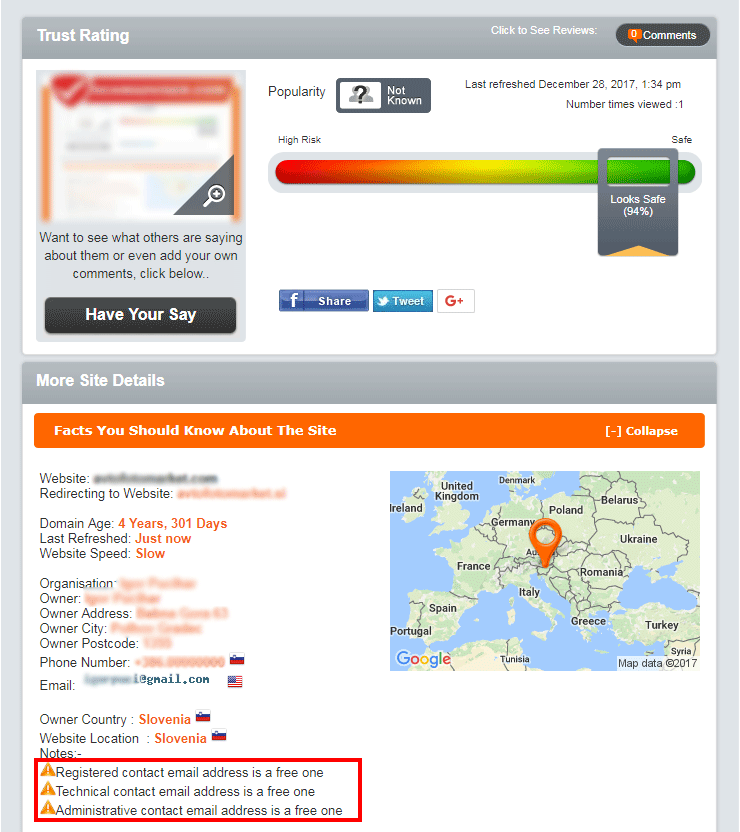
ScamAdviser’s display of inaccurate data has also been reported in the foreign media:


For checking websites or shops, we therefore prefer to use the tools mentioned in the previous point.
11. Suspicious links to an online shop
Did you access a website via a link sent to your email address? Even if it is a known sender, they may have inadvertently sent you a link to a malicious website. If it is an email address from an unknown sender, we do not recommend clicking on the links.
Paid search engine hits can also be a problem, so always check how you got to the page. Most of these sites try to get to the top of the search results by repeating keywords. They also buy links and sometimes still use invisible text on the page. Google’s algorithms detect most spam, but it is still worth being careful.
12. Untrustworthy payment methods
You should always be careful when paying online. If the only payment options are Western Union or MoneyGram, then leave the site immediately. When paying by these methods, it is not possible to trace the transaction, so if it is misused you will never get your money back. Only use secure payment methods such as PayPal and credit cards. And always pay via encrypted transfer.
13. Low prices
The old saying goes, if something sounds too good to be true… then it is. So beware and don’t fall for suspicious offers. Avoid online shops that offer products from well-known brands at suspiciously low prices.
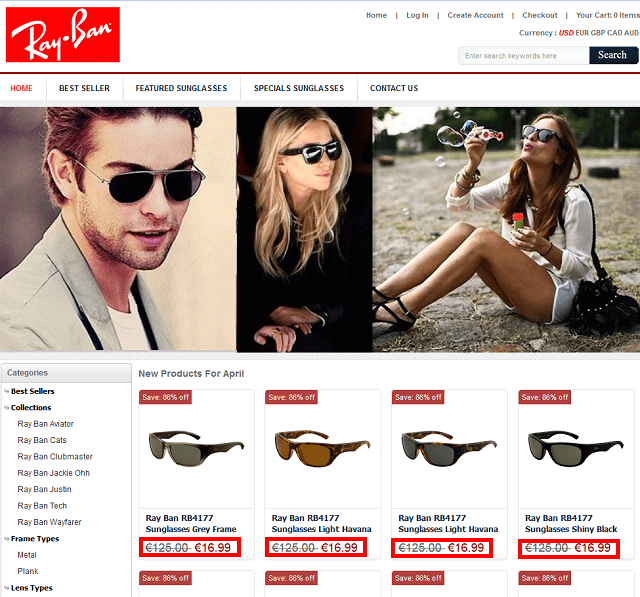
As a rule of thumb, if prices are on average at least 50% lower, there is a good chance that the goods are counterfeit. In the case of the online shop above, there is a discount of more than 85% on the products. Please leave the site immediately and report it to the Safe on the Internet project.
Conclusion
Unfortunately, the trend of online scams is also growing in Slovenia. Follow the above ways to spot a fake online shop and avoid becoming a victim of online shopping.
COMMENT THE POST
Your comment has been successfully submitted
The comment will be visible on the page when our moderators approve it.