


- Your cart is currently empty.
How to Handle Backlinks After Switching to HTTPS
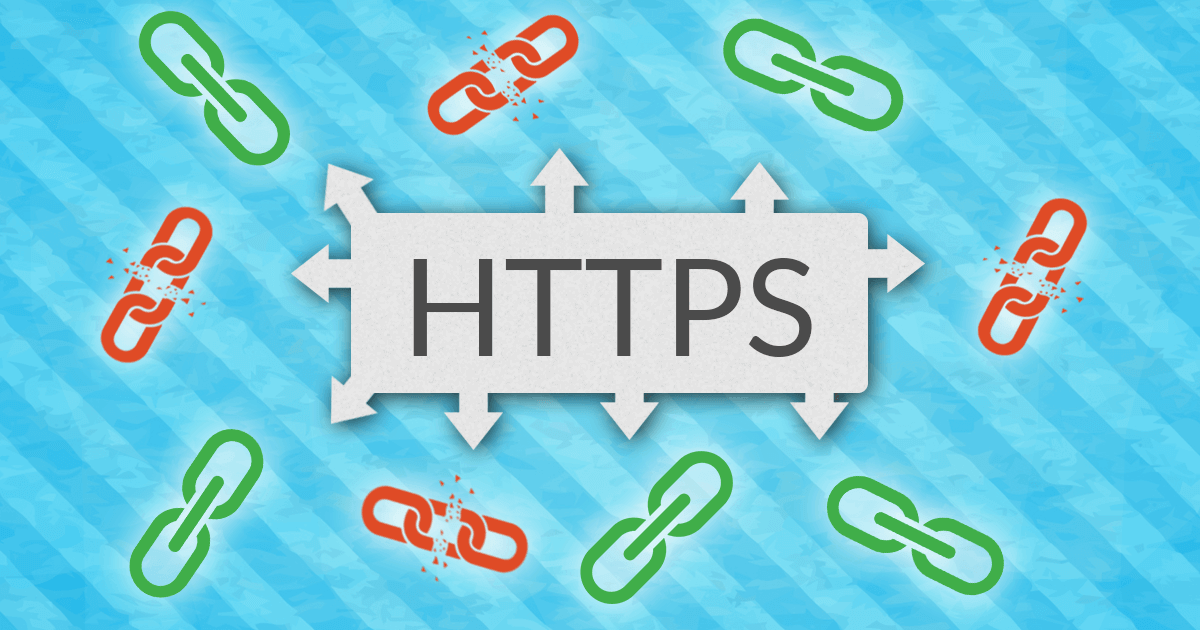

Have you decided to install an SSL certificate on your website? Then you probably already know that your site will no longer be on an HTTP connection, but on a secured HTTPS connection. Well, if you do nothing after installing it, it won’t actually be quite like that, as the site will be accessible on both the unsecured and the secured connection. And that’s definitely not a good thing.
It is very important that after installing the SSL certificate, you make sure that the website is only accessible over an HTTPS connection. Not only will this be better for your visitors, but it will also help you to maintain your search engine rankings (e.g. on Google) or even improve them further.
We recently wrote about how to ensure that your website is correctly migrated to HTTPS. You can read more about the switch here, and today we’ll answer the question of how the switch itself affects the impact of backlinks.
After installing an SSL certificate, website owners are usually asked the following question: “Links on other websites pointing to my website are directed to the HTTP version of the page. Does this mean that all backlinks will be worthless? Will this cause my site to go down? Is there anything I can do about it?”
What is “link juice” and why do we mention it?
Have you ever wondered how Google ranks search results in its search engine? There are said to be more than 200 ranking factors. Some have more weight, others less. One of the most important factors is backlinks, which are directed to a particular website from other websites. Through these links, so-called ‘link juice‘ flows to the website. The more links that are transferred, the more authoritative the website is and the higher it ranks in search engines.
Quality, not quantity, plays a crucial role in backlinks. It is therefore important that links are obtained from established websites, as this way morelink juiceis transferred. One link from a high quality website can be worth more than many links from low quality and unrelated sites.
Read on to find out what happens to thelink juiceffect and a website’s Google search rankings after switching to HTTPS.
How to keep the backlink effect after MIGRATION?
Since your website was previously located on an HTTP link, all backlinks are directed to that address. Does this mean that moving to HTTPS will cause your site to lose all the “link juice” – all the power it has gained over the years? If you make sure you make the transition correctly, then definitely not, as your old HTTP links will be redirected to the new HTTPS ones.
Years ago, it was thought that around 15% of link strength was lost through permanent “301” and temporary “302” redirects. For many website owners, this was a good enough reason not to invest in an SSL certificate. It was only a matter of time before Google would step forward and make an exception for HTTP to HTTPS redirects.
It happened on 1 February 2016, when John Mueller, Google’s web analytics expert, announced on his Google+ profile that redirects to HTTPS would now no longer lose “link juice“. This was certainly great news and made it easier and quicker for many website owners to invest in an SSL certificate.
Have you not decided to buy an SSL certificate yet? At NEOSERV we offer affordable domain, business and extended SSL certificates from the renowned issuer Sectigo (Comodo CA). If you are not sure what all the benefits of installing a certificate would mean for your website, we recommend reading this article.
Although the backlinks will remain as effective as they were before the SSL certificate was installed, it is advisable to update as many of them as possible. Please contact the owners of the websites from which the links are directed to your site and ask them to change them.
Of course, don’t forget to update the ones that you can edit yourself:
- internal and “canonical” links, directly on your website;
- any links in the robotx.txt file;
- links from social networks (Facebook, Google+, Twitter, Pinterest, …);
- links from signatures or usernames on forums;
- links from your own blogs, web portals, etc.;
- links from online directories that allow you to edit existing entries.
Also check your advertising campaigns (e.g. Google AdWords, Facebook, email advertising) and update the target URLs. It will also be useful to update your Google Analytics link or any other tool designed to collect and analyse various statistics.
Finally, it should be noted that short-term fluctuations in the positions of keywords in search engines are possible after the switch to the HTTPS protocol. Incidentally, John Mueller wrote in the aforementioned communication that Google’s search result ranking system favours migration to a secure HTTPS connection. Fear is therefore unnecessary. Anyone who makes the switch sooner will also enjoy all the benefits of an SSL certificate sooner.
COMMENT THE POST
Your comment has been successfully submitted
The comment will be visible on the page when our moderators approve it.