


- Your cart is currently empty.
How to Reach the First Position on Google? – Part 2
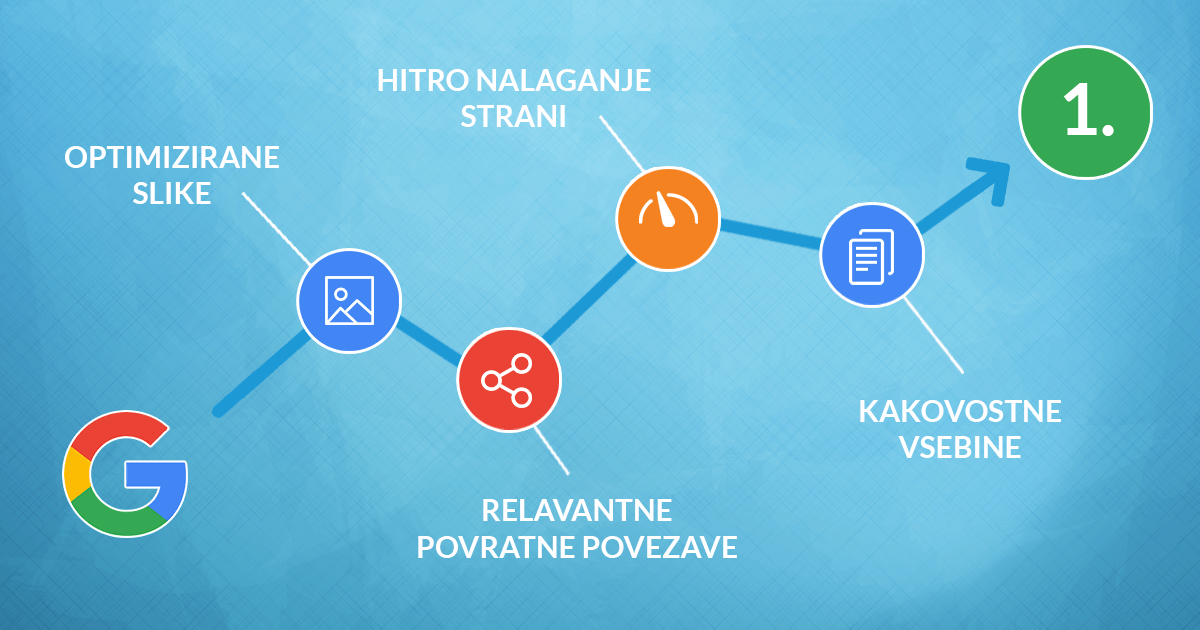

Have you read the first part of this article? Then you know that on-site optimization (on-site SEO) refers to the implementation of certain actions on the website itself, while off-site optimization (off-site SEO) covers factors outside the website.
Off-site optimization is mainly about building external links, i.e. getting links from other websites that are directed to yours. This process is also known as “link building“.
In off-site optimization, there are two types of links to a website:
- The first is natural links, which are created by other websites citing your website as a source, mainly for relevant and useful content.
- Artificial or unnatural links are primarily intended for Google’s web spiders, as they make your website more relevant to the search engine.
Here are some examples of how to get links:
- Posting articles on blogs and web portals,
- publishing sponsored and PR articles,
- listing your website in online directories,
- exchanging links with other website owners,
- participation in online forums,
- posting links on social networks.
It doesn’t matter where you get your links from, they don’t all contribute to better rankings. What is important is that you know which backlinks are worth your attention and which ones you definitely don’t want. Bad links can have a negative impact on your website’s ranking in Google search.
What backlinks do I need to get?
There are many factors that influence the weight of a particular link. With the vast sophistication of the web spider algorithm, we can’t know them all, but through testing and experience, we can identify those that have a significant impact on how websites rank in Google search. Let’s take a look.
1. Website authority
The authority of the website from which the link to your page comes is one of the factors that determine the weight of a link. The more popular or the more visitors a website has, the higher its value.
Google uses the PageRank (PR) system to evaluate websites. The maximum PageRank of a website is 10 and the minimum is 0. The closer the PR (value) of a website is to 10, the more valuable the links coming from that website are.
Unfortunately, PageRank is not as useful today as it used to be, as Google has not updated the metrics for the public since December 2013. More and more webmasters prefer to use alternative metrics such as DA(Domain Authority), PA(Page Authority), TF(Trust Flow), CF(Citation Flow), etc.
2. Quality and quantity of backlinks
The quality of backlinks is an extremely important factor in off-site optimization. The higher the quality of the links directed to your website, the higher it will rank in Google search.
The quantity of backlinks is also important, but much less so than the quality. Many website owners used to get a lot of low-quality links in an automated way years ago, which is why Google now places much more emphasis on quality. A large number of low-quality links can even lead to a domain being removed from a search engine.
Focus on getting quality backlinks from authoritative websites.
3. Website theme and language relevance
Also pay attention to the subject matter of the website from where you are getting links. The more the topic matches the theme of your website, the more weight a link directed to your website carries.
For example: If your topic is ‘web hosting’, backlinks will have the greatest impact if you get them from websites related to that topic. Blogs and forums on web hosting are therefore particularly suitable.
Quality is also measured by the language of the website from which the links come. The impact of links will be greater if the content of both websites is in the same language.
How to get good backlinks?
One of the best ways to get quality links is to have a blog on a separate domain. Not only is a blog a valuable source of information about your business, products, services and the company itself, a blog is also essential for off-site optimization.
Writing a blog and thus optimizing your website is also recommended by Google’s optimization experts. By adding new articles to your blog, you can ensure two things – that your customers will come back to your website for interesting content, and that you will be able to include links in that content that will lead visitors to your main website, while at the same time ensuring that it ranks higher in search engines.
Want to get relevant links but don’t have time to write a blog? Maybe you don’t have the right drive to deliver high quality, value-added content? We can help. Send us an email at info@neoserv.com and ask us for details.
COMMENT THE POST
Your comment has been successfully submitted
The comment will be visible on the page when our moderators approve it.